Init Systems: Understanding Service Management
Init Systems: Understanding Service Management
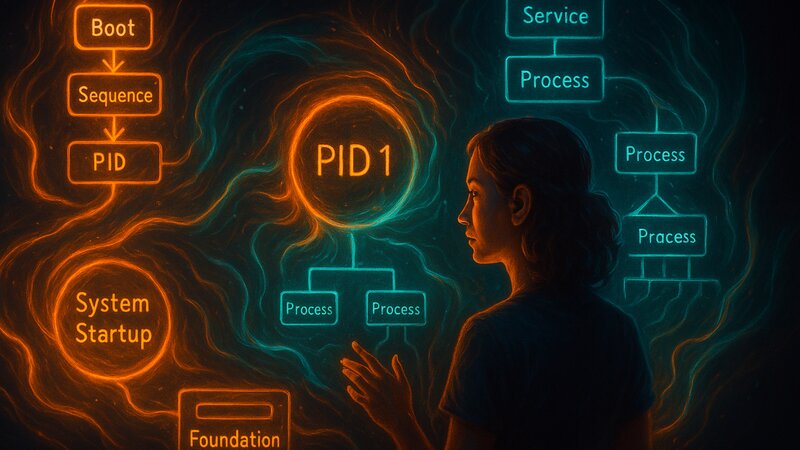
Every Unix system starts with an init process. This process always has process ID 1 (PID 1) and is the ancestor of every other process. The init system manages background services—SSH servers, web servers, databases.
Modern Linux systems usually use systemd. Traditional Unix systems used SysV Init. OpenBSD uses rcctl. The tools differ, but the concepts remain similar: start services, stop services, monitor them, and restart them when necessary.
Why Init Systems Matter
Servers only function when their services run reliably. A crashed SSH server makes the system unreachable. A web server that fails to start serves no content. The init system ensures that critical services start automatically and are restarted when problems occur.
The choice of init system fundamentally influences system administration. systemd provides extensive features and complex dependencies. SysV Init is simpler and more transparent. OpenBSD’s rcctl deliberately minimizes complexity.
This series explains the concepts independently of any specific system. Distribution-specific commands such as systemctl or rcctl are covered in the corresponding distribution articles.
The Three Articles in This Series
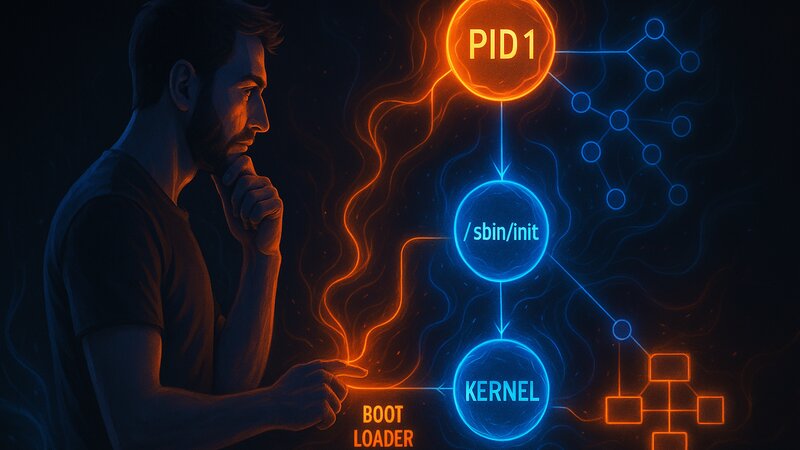
The Init Concept: PID 1 and System Startup
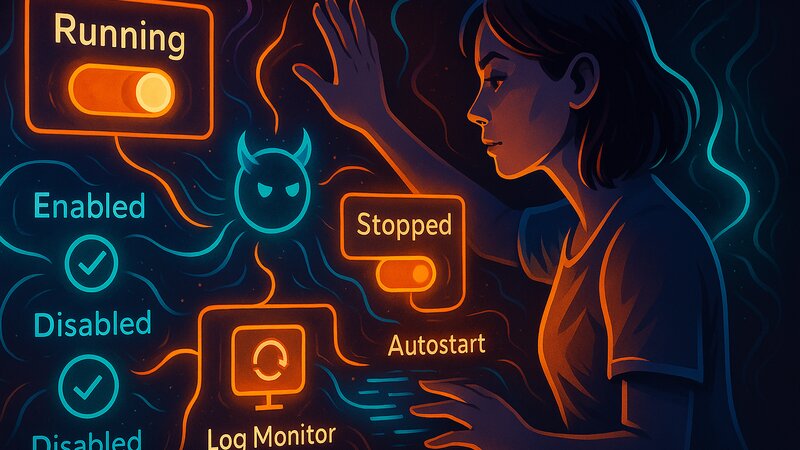
Service Management: Controlling Services

Dependencies and Startup Order
Comparison: systemd, SysV Init, BSD Init
This series explains the concepts in a neutral way. The distribution articles then show the specific implementation:
systemd (Debian, Arch):
- Complex system with many features
- Parallel service startup
- Units with declarative dependencies
- Binary logs (journald)
SysV Init (traditional):
- Shell scripts in
/etc/init.d/ - Sequential startup with runlevels
- Text-based logs
- Easy to understand
BSD Init (OpenBSD):
/etc/rc.d/scripts- rcctl for service management
- Minimal complexity
- Transparent configuration
After These Fundamentals
With this foundation, the distribution-specific articles become easier to understand:
- Debian Fundamentals (planned) show systemd integration
- OpenBSD Fundamentals (planned) explain rcctl
- Arch Fundamentals (planned) use systemd with Arch-specific features
These articles assume an understanding of init systems and cover only the distribution-specific details.
Related Fundamentals:
- Linux/Unix Filesystem for service configuration
- Networking Fundamentals for network services