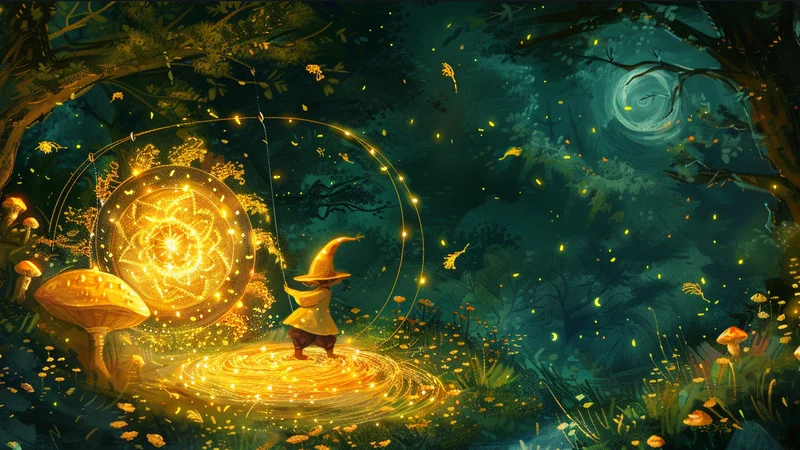
A little man spins straw into gold. He demands a price. In the end, he tears himself apart after his name is spoken.
That sounds like a story about cleverness and good fortune. It is a story about guilt—and about what happens when you promise something to a force from the depths and fail to keep that promise.
Naturally, we want to take a closer look.
For context:
The oldest surviving literary version is the French Ricdin-Ricdon by Marie-Jeanne L’Héritier from Tour ténébreuse (1705). The German text by the Brothers Grimm—first published in 1812—is the oldest German version known to us, collected from Dortchen Wild and the Hassenpflug family.
Important:
In the 1812 version, the little man ran away in anger at the end. It was only in a later version, told by Dortchen Wild, that Rumpelstiltskin tore himself in two—published in the second edition of 1819. That dramatic ending is therefore not part of the original story, but a later addition.
Layer 1: The Figure Behind the Figure
Rumpelstiltskin is not a villain. That is the first reinterpretation the fairy tale underwent—and it runs deep.
Originally, this figure was a nature spirit. A goblin, an earth spirit, a being that belongs to the realm between worlds—related to the Scandinavian tomte, the English hob, and the German poltergeist. Linguists have identified the Rumpelstiltskin motif as one of the oldest of all: it can be traced back to the earliest split within the Western Indo-European language family, at least 2,000 to 4,000 years ago. This is not a Grimm creation. It is an ancient image.
These spirits help. They bake, they brew, they work—typical traits of dwarfs and earth spirits in European folklore. But they do not help for free. They are not service providers. They are forces that know the price—and the price is real.
The fact that the little man appears to lose at the end of the story pushed the fairy tale in a particular direction: the evil goblin is defeated, the girl wins. But anyone who looks more closely notices that the fairy tale itself does not judge things quite so clearly. Rumpelstiltskin’s final words—“The devil told you that!"—do not sound like the words of someone who has been defeated. They sound like the words of someone who has been betrayed.
Layer 2: The Fairy Tale
First published in 1812, KHM 55. Sources: the Hassenpflug family and Dortchen Wild (based on Wilhelm Grimm’s personal copy). The motif is widespread throughout Europe: Tom Tit Tot in England, Whuppity Stoorie in Scotland, Titteliture in France—always the same core: a spirit helps, demands a child, but loses its claim if its name is guessed.
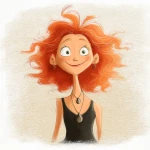
The girl sat there and wept. Then a little man came in and asked what he would receive if he did the work for her. She gave him her necklace. The little man sat down at the spinning wheel and spun—and by morning all the straw had become gold.
The king was delighted and had her locked in a larger chamber with even more straw. Once again the little man appeared. This time she gave him her ring. And once again the little man went to work, and by morning all the straw had been spun into gold.
But the king wanted more. And once again the little man appeared, but she had nothing left that she could give him. The little man demanded her first child once she became queen. She promised it.
And she became queen. When her first child was born, the little man appeared and reminded her of her promise. The queen wept so bitterly that he gave her three days to guess his name—if she named him, she could keep her child.
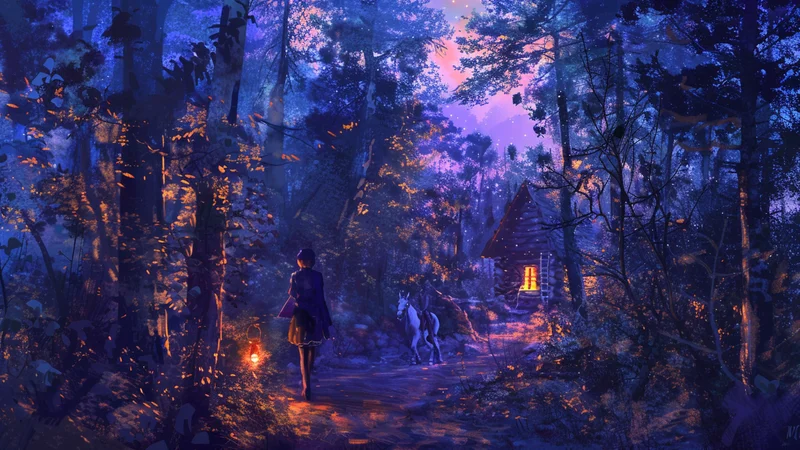
For two days she guessed incorrectly. On the third day, a messenger reported that deep in the forest he had seen a little man dancing around a fire, hopping on one leg and singing: “Today I bake, tomorrow I brew, the next day I’ll fetch the queen’s child. Oh, how good it is that no one knows my name is Rumpelstiltskin.”
When the little man returned and asked, the queen first guessed two wrong names—then she asked, “Could your name be Rumpelstiltskin?” The little man screamed, “The devil told you that!"—and in his rage tore himself in half.
What Is Really Being Told Here
The Miller
The fairy tale begins with a lie. Not with Rumpelstiltskin’s demand—but with the father’s boasting.
The miller lies to the king in order to marry off his daughter. The girl is locked in a chamber, threatened with death, saved three times by someone else’s power—and in the end she becomes queen. The father escapes without consequence. The fairy tale says nothing about that.
But everything begins here. The guilt, the threat, the bargain—they all arise from that first sentence spoken by someone who could never deliver what he claimed.
The Straw and the Gold
The miller is not a random occupation. Mills stood on the edges of villages, harnessing elemental forces—wind and water—and transforming the coarse into the fine. Grinding grain was an alchemical process. A miller’s daughter lives at the boundary between the everyday world and whatever lies beneath it.
Spinning straw into gold. That is not merely an exaggeration. It is alchemy—the transformation of the worthless into the most precious. And the little man can do it. He is a being of fire, a spirit of transformation—that is why he dances around the fire, why he bakes and brews. Fire is the force that turns straw into gold, flour into bread, malt into beer. He understands the process.
The miller’s daughter does not. She has the lineage—but not the power.
The Price
First night: the necklace. Second night: the ring. Third night: the first child.
This is not a random escalation. It is a symbolic sequence.
The necklace stands for dignity, for belonging—the sign one wears that shows who one is. The ring stands for connection and promise, for the awareness of a relationship. And the child—the first one, the unborn one—stands for the future, for the ancestral line, for what extends beyond one’s own life.
The little man does not demand possessions. He demands connectedness. With what is older. With what comes from the earth and returns to it.
Ancient cultures understood this principle: the first fruit of the field belonged back to the earth. The first animal of the litter, the first harvest, the first son—all of these were regarded as something borrowed, not owned. The goal was never to take the child. It was the willingness not to regard it as property.
The fairy tale still knows this. But it no longer knows that it knows it.
The Name
This is the heart of the fairy tale—and its darkest part.
In many cultures, a name is not merely a label, but a being in itself. Whoever knows the name has power. Whoever speaks the name calls the force forth or binds it. This applies to gods, demons, and nature spirits alike. That is why the little man dances alone, deep in the forest, singing his own name—he believes himself unseen. His name is his secret, his protected place, his very self.
And it is stolen from him.
Not guessed—stolen. A messenger overhears the little man. That is espionage, not guessing. The fairy tale does not present it as a trick—but that is exactly what it is. The queen did not prevail through cleverness. She prevailed through chance and through someone else’s eyes.
Here lies the deepest misunderstanding in the Grimm interpretation.
The little man is considered defeated. But a nature spirit that loses its name loses its identity. It destroys itself—not as punishment for evil, but because the only thing that defined it has been taken away. Tearing himself apart is not a comic ending. It is a dissolution.
“The devil told you that!”
This final sentence has occupied scholars—because the devil has not appeared anywhere else in the fairy tale up to this point.
It comes from an older layer. In folk legends, the supernatural helper often appears in connection with the devil—not because the helper is evil, but because Christianization pushed all nature spirits into the realm of evil. What had once been an earth spirit became a pact with the devil.
Rumpelstiltskin himself knows this. He knows how he is seen. He knows what has been done to him. And he says it—once, at the very end, before he dissolves.
It is not a curse. It is a lament.
But
In the original story, the little man runs away in anger; he does not tear himself apart. Only in the later version does he rip himself into two pieces. That escalation is not a dramatic decision—it is a theological one.
What was once a nature being, a goblin from the old order of the world, becomes a pact with the devil. What has been conquered must be destroyed. It must not simply disappear. It must destroy itself.
That is the fragment. The little man himself is not the problem—but what people turned him into over the centuries is.
What the Moralizing Interpretation Makes of It
The usual message is this: the evil little man is defeated. The queen is clever and saves her child. Good triumphs.
But the fairy tale does not tell it quite so clearly.
The queen accepted help three times. She made three promises. And with the third promise—the child—she knew what was at stake. She gave it anyway. And then, once the child was there, she no longer wanted to keep her promise.
The fairy tale does not judge this. It shows it. And it shows how the story ends: with a spirit torn apart, crying out its own name before it vanished.
Whether that is a happy ending, the fairy tale leaves unanswered.
What the Fairy Tale Says
There are forces that help. They have a price. The price is not greed—it is respect for what is older than we are.
When you make a promise and fail to keep it, the problem does not disappear because of that. The force that helped disappears. And with it, something that cannot be named.
Rumpelstiltskin dances around his fire and sings his name into the forest, where foxes and hares bid each other good night. Alone. Safe. Until someone listens.
That is not an image of danger. It is an image of loneliness.
And the fairy tale ends by suggesting that this loneliness was right.
Unearthed From:
- Grimm, KHM 55 (1857 edition): https://www.maerchenstern.de/maerchen/rumpelstilzchen.php
- Etymology, folklore of goblins, Indo-European distribution of the motif: https://wichte-im-wandel.jimdofree.com/2017/09/21/rumpelstilzchen/
- Rumpelstiltskin as a nature spirit, the miller’s alchemy, symbolism of the gifts: https://www.inana.info/blog/2015/02/06/erde-und-mensch-rumpelstilzchen.html
- Pact with the devil motif, Christianization of nature spirits: https://de.wikipedia.org/wiki/Rumpelstilzchen
- ATU 500, European variants (Tom Tit Tot, Whuppity Stoorie): https://www.maerchenatlas.de/deutsche-maerchen/grimms-marchen/rumpelstilzchen/